
This post is a breakdown of my most recent trade, taken between December 18 and 19, 2025. I’m documenting it to reflect on my process—what I did right, where I rushed, and what I need to improve going forward.
My overall bias for this trade was built using fundamentals, market structure, and price action.
1. Fundamental Bias
Before opening my charts, I always start with fundamentals. I checked the Forex Factory calendar to review the day’s news and broader market context.
From my analysis:
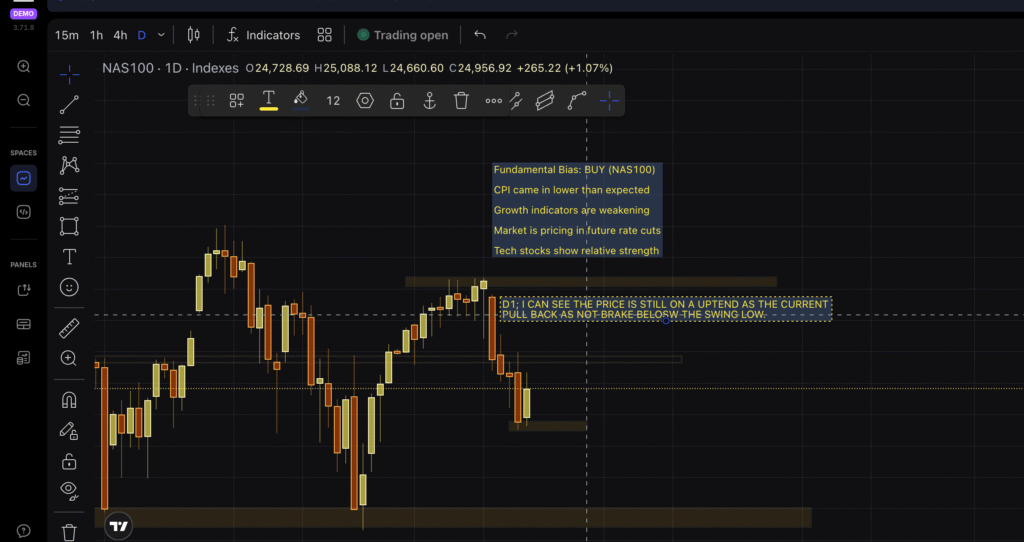
- CPI came in lower than expected
- Growth indicators showed signs of weakening
- The market appeared to be pricing in future rate cuts
Because of this, tech stocks—especially NAS100—were showing relative strength. That gave me a bullish fundamental bias going into the session.
2. Market Structure (Higher Time Frame)
To understand the bigger picture, I started on the Daily (D1) timeframe.
On D1, I:
- Marked out key support zones
- Identified previous swing highs and swing lows
- Observed a change in structure
Price had broken above a previous lower high and was forming a new higher high, which aligned with my bullish fundamental bias. This confirmation pushed me to drop down to a lower timeframe to look for trade opportunities.
(Chart screenshot here for reference)
3. My Mistake – Bias Over Discipline
Next, I moved down to the 4H timeframe to refine my zones and look for entries.
At this point, my bias was clearly bullish due to:
- Fundamentals
- Confirmed market structure on D1
So I told myself I would only look for long setups.
This is where I made my first mistake.
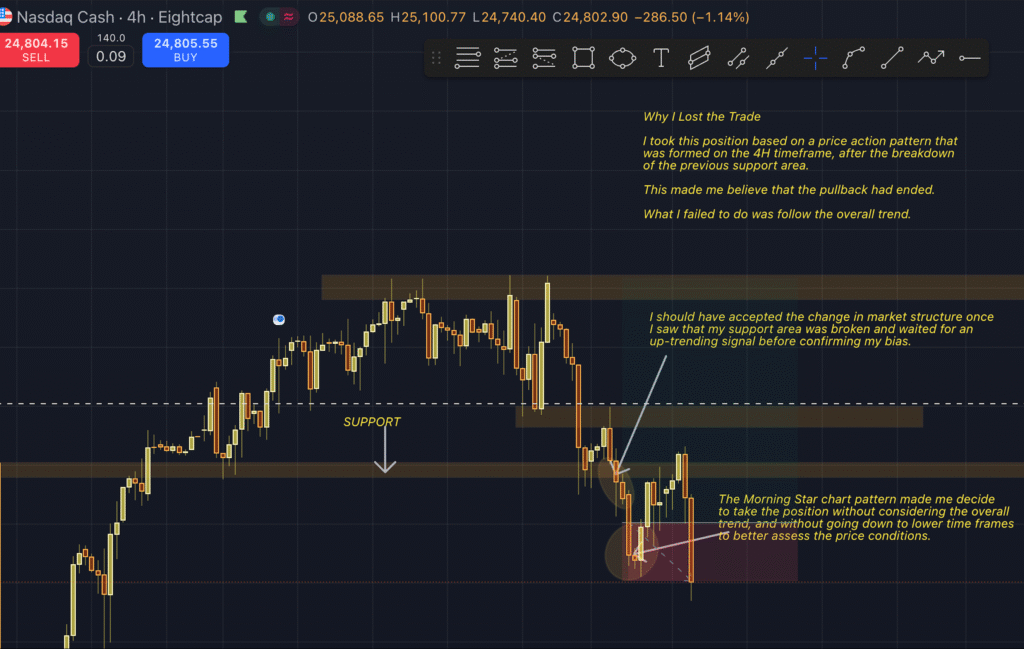
I entered a trade based mainly on a Morning Star candlestick pattern that formed below a swing low. In my mind, that pattern signaled the end of the pullback.
But the truth is:
- I did not wait for a clear change of structure
- I relied too much on my bias
- I ignored what the lower timeframe structure was actually telling me
That entry resulted in a loss.
(Chart screenshot here for reference)
4. Re-evaluating the Bias
The next day, instead of forcing another trade, I did something important—I reset.
- Cleared my chart completely
- Re-marked my zones from the higher timeframe
- Then worked my way back down to the lower timeframes with a fresh perspective
This helped me detach emotionally from my previous bias and focus on what Price was actually doing.
5. Price Action & Entry Execution
On the 1H timeframe, I noticed the price moving strongly toward a previous lower high. Momentum looked strong, and this gave me a clue that a change of structure might be approaching.
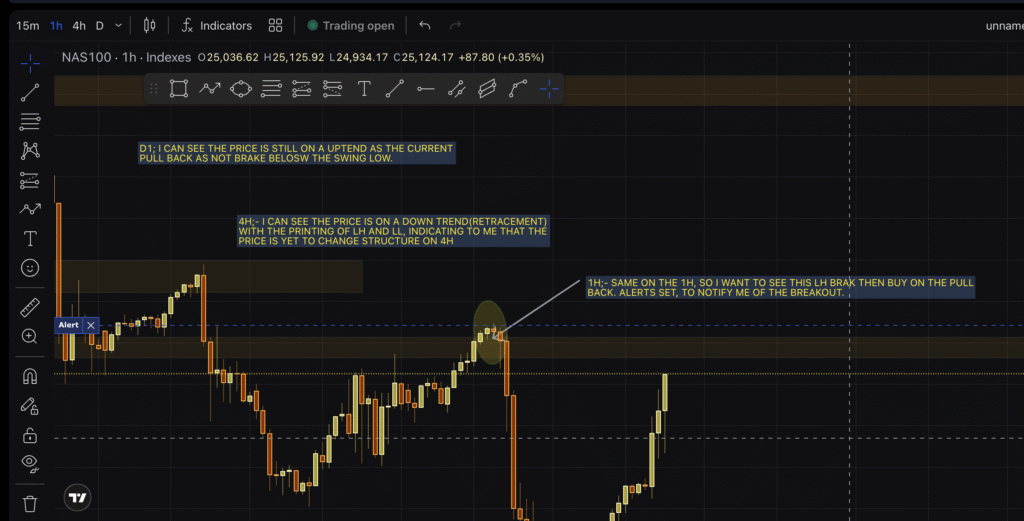
That observation pushed me down to the 15-minute timeframe.
On 15M:
- I waited patiently for a pullback
- After the pullback completed, I entered based on confirmation, not hope
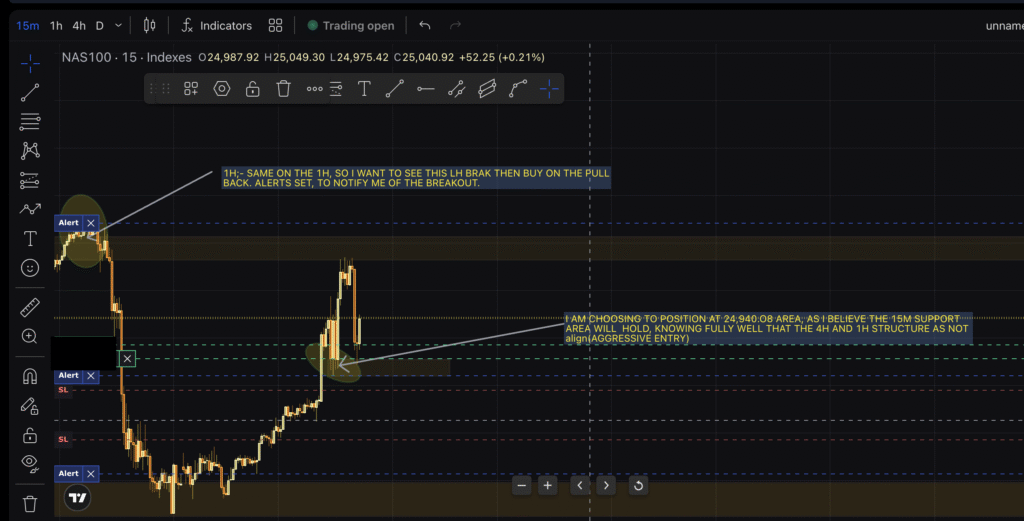
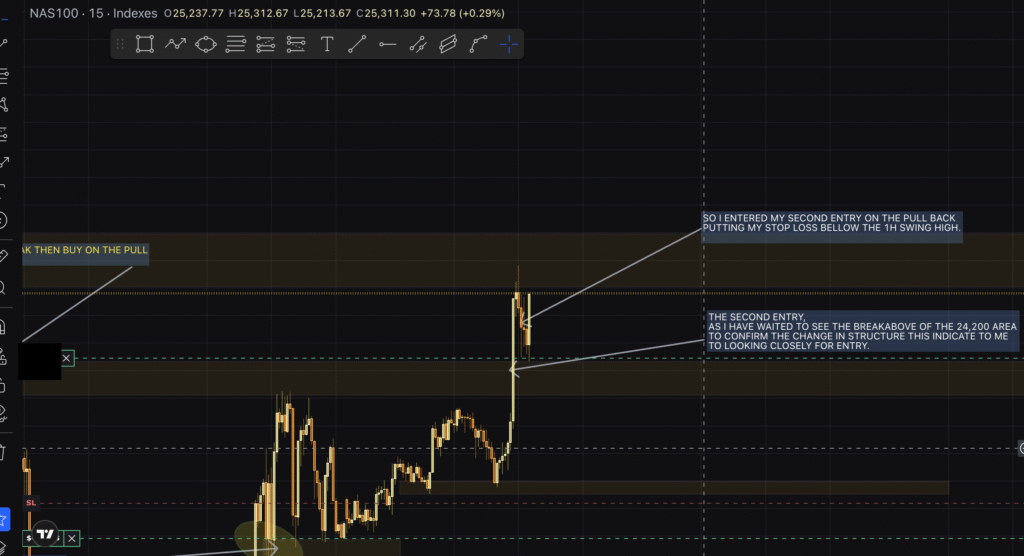
Later, once the price broke above the 1H swing high, I took an additional entry aligned with the trend.
This time, the trade respected:
- My fundamental bias
- Higher-timeframe structure
- Lower-timeframe price action
(Chart screenshots here for reference)
My Key Takeaway
This trade reminded me of something simple—but important:
I need to be more patient and wait for all parts of my plan to align before entering a position.
Bias alone is not enough. Candlestick patterns alone are not enough. Everything must work together.
This journal entry is another step toward becoming more disciplined, more patient, and more intentional with every trade I take.
One trade at a time.
Disclaimer.
This post is shared for educational and journaling purposes only. It reflects my personal trading experience, analysis, and thought process at the time of the trade.
Nothing in this post should be considered financial or investment advice. Trading and investing involve significant risk, and losses can exceed expectations. Always do your own research and consider your financial situation and risk tolerance before making any trading decisions.
I am documenting my journey to learn, improve, and stay accountable — not to tell anyone else how to trade.